
Proposed World Heritage Site under threat
The Kasanka National Park in Zambia – home to the world’s largest mammal migration is under threat from development.
Up to ten million fruit bats migrate to the wetlands in Kasanka for a few months every year. It’s a globally significant biological spectacle that draws in tourists and helps to underpin the fastest growing economic sector in Zambia.
Kasanka National Park receives the highest level of protection in Zambia – because of the unique flora and fauna that it supports – but critical to the whole ecosystem is the habitat immediately surrounding that park that is currently being illegally deforested by the Tanzanian based Lake Group and its subsidiary Lake Agro Industries.
This habitat around the Park, designated the Kafinda Game Management Area (GMA).
also receives protection but this is being ignored. Lake Agro Industries have cleared over 560ha of pristine woodland in the zone. The future of the whole area now hangs in the balance.

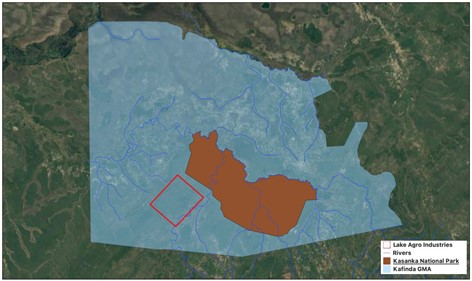
The Zambian government have temporally halted the destruction but Lake Agro Industries are persevering – they have submitted a formal Environmental and Social Impact Assessment (ESIA) for consideration, requesting permission from the Zambia Environmental Management Agency (ZEMA) to develop commercial agriculture and associated infrastructure over a 7,000ha footprint inside the GMA, less than 3km from the National Park where the bats roost.
Local ecologist and conservation biologist Helen Taylor-Boyd says: “The value that the Park and GMA buffer provides through ecosystem services such as water catchment and carbon sequestration, as well as tourism livelihoods, cannot be underestimated. Kasanka National Park is also host to the world famous fruit bat migration and impacts here will have a knock on effect for seed dispersal locally, nationally and beyond borders”.
Background
- Kasanka National Park hosts a number of exceptional natural features, including:
- A seasonal colony of up to ten million straw-coloured fruit bats, a significant part of the subequatorial population of this IUCN Red List Near-Threatened species and a major attraction for tourism.
- The second longest bird list of all National Parks and Important Bird and Biodiversity Areas in Zambia, a highly diverse avifauna that includes many threatened species.
- Important populations of the scarce sitatunga, offering the best viewing in Zambia and beyond; the IUCN Red List Near-Threatened puku; and the little known Kinda baboon.
- A healthy and diverse complex of rivers for which the Park is of great importance for the ecological and socio-economic functioning of these.
- A unique small-scale diversity of intact habitats, including threatened habitats such as the mushitu and mateshe evergreen forests, hosting an enormous biodiversity.
- The area under threat, the GMA is crucial to the integrity of the Park, providing a buffer and transition into other sustainable land uses.
- When the world’s largest mammal migration occurs in October each year, the straw-coloured fruit bats take up residence in a small area of evergreen forest in the very heart of Kasanka National Park. Every evening they leave the roost to forage well beyond the artificial boundary of the Park, venturing deep into the Kafinda GMA.
- Research has shown that these bats migrate huge distances from countries including DRC, South Sudan and Tanzania. Along the way they deliver invaluable ecosystem services, such as seed dispersal and the promotion of reforestation. Effects at Kasanka will have repercussions felt across Central Africa.
- Despite the legal status of the GMA it’s protection is not being enforced. The landscape is being deforested and degraded at an alarming rate, posing a direct threat to the integrity of the Park’s ecosystems and the animals it supports.
- In 2019, Lake Agro Industries cleared over 560ha of pristine woodland in Kafinda GMA without the appropriate permission. Government departments issued three stop orders before closing the farm in March 2020.
- Lake Agro Industries has now submitted a formal Environmental and Social Impact Assessment (ESIA) for consideration, requesting permission from the Zambia Environmental Management Agency (ZEMA) to develop commercial agriculture and associated infrastructure less than 3km from the National Park.
- Proposals include drawing water directly from the Luwombwa River, which feeds the wetland habitats of Kasanka National Park. It is estimated that abstraction at peak demand in September would be greater than 90% of the remaining flow of the Luwombwa River.
- The ESIA report concludes that “the identified environmental impacts have been fully mitigated against”, with proposed mitigation to compensate for deforestation being “avoid clearing or damaging intact habitats” – despite the 7,000ha scheme being situated entirely within the intact habitats of the GMA.
- Potential impacts on the Protected Area network (Kasanka National Park and Kafinda GMA) are not given any consideration in the ESIA and, in 245 pages, there is not a single mention of a bat.
- Kasanka Trust maintain that it would be negligent of ZEMA to grant approval for the proposals. The site selection and occupancy of the GMA would result in devastating impacts to biodiversity conservation at an international scale.
- Elsewhere inside the Kafinda GMA another subsidiary of the Lake Group, Gulf Adventures, has occupied approximately 5,000ha of pristine forest and constructed a game farm. The introduction of species not native to the local area such as ostrich and impala is a further breach of the Game Management Plan that is designed to support the protection of the GMA.
Kasanka Trust will continue to fight against development that threatens the value of our wildlife populations. If your organisation would like to add their support to this battle, please get in touch with James Mwanza – gm@kasanka.com
To support our objection against the Lake Agro ESIA, we need to hear from you by 16th June 2021.

World Land Trust (WLT) is an international conservation charity that protects the world’s most biologically significant and threatened habitats acre by acre.

Stop that Tazanian firm whatever it takes
How can people help (apart from donating funds)? Can foreigners register as interested and affected parties (considering it’s a world heritage site). If so, please send the registration forms and contact details. And publish them. Regards Debbie Gibson
Dear Sirs,
I am writing to object most strongly to the application by Lake Agro Industries to develop the area around Kasanka National Park, a proposed
world heritage site.
As an ecologist I believe altering the land around the park as proposed will do untold harm to the bat population.
This would not only be a tragedy in terms of the loss of a species of vital importance to the ecosystem over massive areas, not just the park itself. I believe it would be serious blow to Zambian tourism, and to the country’s reputation as one which takes the biodiversity crisis seriously.
Kind regards,
Visiting Kasanka was a highlight for this bat enthusiast.a sky full of bats was an unforgettable and the reason I visited Zambia.I am dismayed that the bats and other wildlife is under threat because of greed. At this time of climate change this is doubly foolish.it’s a world heritage site for a reason. This illegal incursion needs action , short term gain has long term consequences including the increase in Zoonitic disease.did covid teach us nothing?
As the former OIC/biologist of the Bangweulu Command for the NPWS in the years 1973-76, and the person responsible for negotiating an agreement in 1984 between the NPWS and David Lloyd, Peter Moss and myself for the management of the park, I am appalled at developments. The recent report on Kasanka by Vera Rduch et al revealing an 84% drop in the puku population, and no sign of waterbuck and eland; and the landgrab of 10,000 hectares inside a 5km buffer zone around the park “prohibited for development ” is an emergency call. That the Kasanka Trust “has been working with the local community to enable them to legally own 60,000 hectares (148,263 acres) of forest surrounding the park” is highly laudable. But there is no mention of my friend Chief Chitambo working with the Trust. And, he sold land to the landgrabbers, the Lake Petroleum Group! He was very wrong to do so, but then he has been ignored by the government and by the Kasanka management. And the land, including the national park and the GMA, and the villages, is actually his responsibility. Empower him, his headmen and spiritual advisors and you will see progress.
The chiefdoms are the key to the protection of the land and its wildlife. Only 52% of Zambia is now customary land; and if you remove the 22% making up the GMAs taken from the chiefdoms, you are left with 30%. Action is required: obtain a Free copy of my ‘Guardians of Eden Manual’. at Kobo.com.
I support all efforts to protect this unique area- as a company we enjoy visiting and bringing tourists to the area and will continue to do so as long as habitat protection is guaranteed. Kasanka Trust has done tremendous work to date – long may they continue and all support and efforts must be given to them to continue.
protecting existing forest with complex & ancient ecological webbing & biodiversity is surely the greatest priority everywhere. Building from scratch takes hundreds, thousands of years but still won’t achieve the complexity and harmony of life force these treasure troves of habitat enshrine. System thinking is long term sustainability. There will be no economic gain once we’ve stripped all the remaining natural and ancient habitats. The planet gets sicker by the day. Surely the decision makers see past a short term fix & profiteering. Good luck.
In Britain we have direct experience of the effect of habitat loss, degradation of landscape and connectivity over many decades. Industrial farming at a landscape scale has led to severe biodiversity loss with consequent population declines of many bat species. Recently Bat Conservation International has had a similar experience when buffer habitat was threatened adjacent to its Bracken Cave free-tail bat population. It is unacceptable that a “for profit” company” can exploit the natural resources of a country in its own interest to the detriment of an IUCN red list near threatened bat species and an extremely biodiverse and protected National Park.
We are a small English county bat group with limited resources but nevertheless feel impelled to write in objection to the further destruction of the Kafinda Game Management Area to the detriment of the internationally important population of straw-coloured fruit bats.
John Puckett, Chair of Kent Bat Group.
Save Kasanka it’s an important wildlife sanctuary, the only one of its kind in the region
Must be saved for the bats and sitatunga
Must be saved for Zambia wildlife
Must be saved for zambian wildlife and world’s largest mammal migration#savekasanka
thank you very much of information